It’s one of the most common questions we hear from homeowners and builders. The answer depends less on what the house looks like and more on what’s under the ground.
Why your neighbor’s system may not match yours
It’s not unusual for a property to need a mound system when the house next door has a regular in-ground drainfield. The reason is simple: the soil does the treatment. As wastewater moves down through unsaturated soil, that soil filters and breaks it down before it reaches groundwater.
Minnesota generally requires about 3 feet of suitable unsaturated soil or sand below the distribution area, above seasonal groundwater or bedrock. If your site doesn’t have that much natural separation, a mound adds it. Clean sand and extra height create the treatment zone the property is missing.
What decides the design here
In Chisago and Washington counties, the approved system comes down to a few things: state rules, local ordinances, your soil, required setbacks from wells, buildings, and property lines, and the space you have to work with. Two lots on the same road can have very different conditions.
Keep in mind that an older drainfield next door may have been installed before current rules were in place. What worked for them then isn’t necessarily what’s allowed for you now.
How we can help
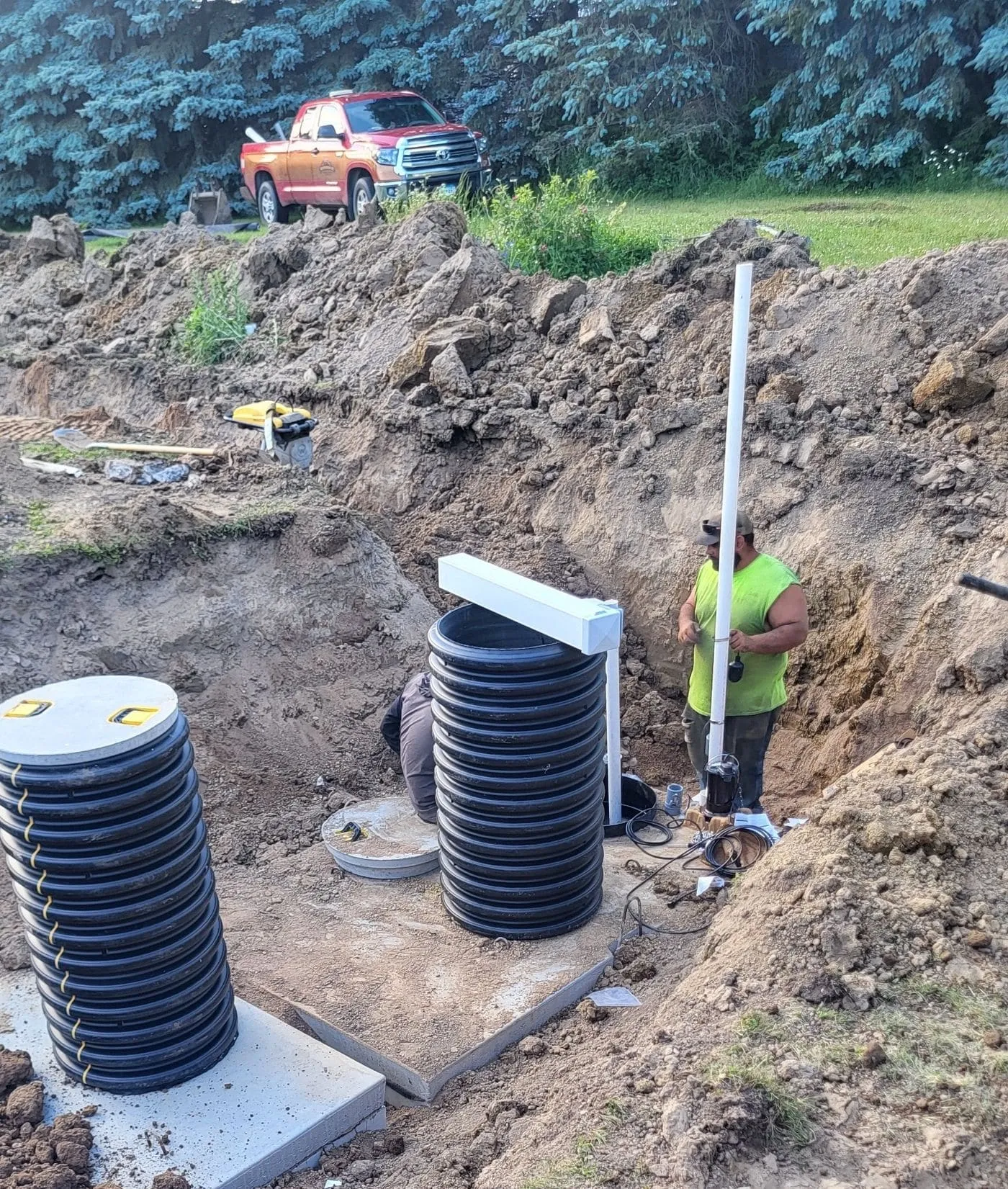
RE Peterson Inc. offers new septic installs as well as updates and replacements of existing systems. We’re trained and certified to assist and build, and we’ll help you understand what your site needs and get the right system in the ground.